Showing posts with label GreenFuture. Show all posts

Friday, 20 February 2026

UK Sustainable Development in Diversity

 Development in Diversity: Embracing Inclusion for a Greener Future**

In recent years, the United Kingdom has positioned itself as a global leader in sustainable development, striving to balance economic growth, social inclusion, and environmental health. Central to this mission is the recognition that sustainable development cannot be achieved without embracing diversity. The UK’s approach to sustainability is evolving, increasingly reflecting the understanding that inclusive policies and diverse communities are vital for fostering innovative solutions, promoting social cohesion, and ensuring equitable progress.


The Foundation of Diversity in UK Sustainability

Sustainable development in the UK is rooted in the principle that everyone deserves access to a healthy environment, economic opportunity, and social justice. Historically, the UK has faced challenges related to social inequality, racial discrimination, and regional disparities. Addressing these issues alongside environmental concerns has become crucial in creating a holistic approach to sustainability. By prioritizing diversity, the UK aims to build a resilient society where all voices are heard, and all communities are empowered to participate actively in shaping a sustainable future.

Diversity encompasses more than just ethnic or cultural differences; it includes age, gender, socioeconomic status, abilities, and perspectives. Recognizing this broad spectrum of identities and experiences allows the UK to design policies and initiatives that are inclusive, representative, and effective.

### Innovation Through Diversity

One of the most significant advantages of embracing diversity in sustainable development is the fostering of innovation. Diverse communities bring varied perspectives, creative ideas, and unique problem-solving approaches that can lead to groundbreaking environmental solutions. For example, innovative green technologies and sustainable practices often emerge from collaborations across cultures and disciplines.

The UK’s commitment to diversity has led to initiatives that incorporate traditional knowledge from indigenous and minority communities, blending it with modern science to create sustainable solutions tailored to local contexts. This collaborative approach enhances resilience against climate change, resource depletion, and pollution.

### Inclusive Policies and Social Cohesion

Inclusive policies are vital for ensuring that the benefits of sustainable development are shared equitably. The UK government has introduced numerous programs aimed at reducing social inequalities, supporting marginalized communities, and fostering participation across diverse groups.

One notable example is the focus on urban regeneration projects in deprived areas, which aim to improve infrastructure, access to clean energy, and green spaces. These projects not only promote environmental sustainability but also strengthen social bonds and community resilience. When communities feel included and valued, they are more likely to engage in sustainable practices and contribute positively to local and national goals.

Education and awareness campaigns are also key components of the UK’s strategy. By promoting understanding of environmental issues through a culturally sensitive lens, these initiatives encourage diverse populations to adopt sustainable lifestyles. Schools, community groups, and media outlets work together to foster a culture of sustainability rooted in respect for diversity.

### Empowering Marginalized Communities

A crucial aspect of the UK’s sustainable development agenda is empowering marginalized communities—those often most vulnerable to the impacts of climate change, pollution, and economic instability. This includes ethnic minorities, low-income households, disabled individuals, and rural populations.

By involving these groups in decision-making processes, the UK ensures that their needs and knowledge are incorporated into sustainability strategies. Programs that focus on skills development, access to renewable energy, and affordable housing enable marginalized communities to participate fully in the green economy. This empowerment not only enhances social justice but also enhances the overall effectiveness of sustainability initiatives.

### Education and Cultural Understanding

The UK recognizes that fostering diversity in sustainability requires ongoing education and cultural understanding. Curriculums are increasingly incorporating topics related to environmental justice, social equity, and intercultural dialogue. This helps cultivate a new generation of environmentally conscious citizens who appreciate the importance of diversity in building sustainable societies.

Community-led projects and intercultural exchanges further promote mutual understanding and respect. These initiatives demonstrate that sustainable development is a shared responsibility that benefits from varied cultural insights and collective action.

### Collaboration for a Sustainable Future

Achieving sustainability in the UK is a collective effort involving government agencies, businesses, civil society, and local communities. Collaboration across sectors is strengthened by the recognition that diversity enhances creativity, resilience, and adaptability.

For example, many UK companies now prioritize diversity and inclusion as part of their corporate sustainability strategies. This approach not only improves workplace culture but also drives innovation in green technologies and sustainable practices. Likewise, NGOs and community organizations play a vital role in advocating for marginalized groups and implementing grassroots projects that promote environmental justice.

### Challenges and Opportunities

While the UK has made significant strides in integrating diversity into its sustainable development framework, challenges remain. Systemic inequalities, historical disparities, and cultural biases still influence how policies are implemented and experienced on the ground. Overcoming these barriers requires ongoing commitment, inclusive dialogue, and adaptive strategies.

At the same time, these challenges present opportunities for growth and learning. By continuously engaging with diverse communities and listening to their voices, the UK can develop more effective, equitable solutions that resonate across society.

### The Future of UK Sustainability in Diversity

Looking ahead, the future of the UK’s sustainable development depends on its ability to uphold and deepen its commitment to diversity. This involves embedding inclusion into all levels of policymaking, fostering intercultural understanding, and ensuring that sustainability benefits are accessible to all.

The UK’s ambitious climate goals, such as reaching net-zero emissions and expanding renewable energy, will be most successful when they are rooted in inclusive practices. As the nation continues to evolve, the integration of diversity and sustainability will remain central to building a resilient, innovative, and equitable society.

---

**In conclusion,** the UK’s journey toward sustainable development is intrinsically linked to its embrace of diversity. By recognizing and valuing the myriad perspectives, experiences, and talents across its population, the country is fostering a more innovative, just, and resilient future. As the UK leads by example, its commitment to inclusivity and environmental stewardship demonstrates that sustainable development is most effective when everyone is part of the conversation and the solution.


Friday, 13 December 2024

2024 UK Ideal Membership in G20 Africa 2025

Embracing a Sustainable Future: The UK’s Role in G20 Africa 2025

As Accomplishment  the Historical year of 2024, the United Kingdom finds itself at a pivotal moment in international diplomacy and sustainable development. The G20, an influential forum of major economies, has increasingly turned its attention to the complex challenges facing Africa. With the United Kingdom's sustainable membership in G20 Africa 2025 on the horizon, we have a unique opportunity to champion sustainability and foster collaborative solutions for the continent’s growth. This blog post will reflect on the accomplishments we've made in 2024 and the lessons learned through living scenarios, fostering a spirit of optimism and collaboration.


 The State of Sustainability in 2024

In 2024, the concept of sustainability is no longer peripheral; it has become a central pillar of policy-making and corporate strategy. Around the world, nations are aligning their goals with the United Nations Sustainable Development Goals (SDGs), and the UK is no exception. This year has brought significant advancements in renewable energy, circular economies, and sustainable agriculture, pushing the UK to the forefront of global sustainability efforts.

Our achievements in sustainability have not only set benchmarks for our internal policies but have also positioned us as a leader in the international community. The emphasis on reducing carbon footprints, promoting green technologies, and ensuring the protection of biodiversity has gained traction. These accomplishments provide us with a strong foundation to build our approach as we prepare for our role in the G20 Africa 2025.


 Building Strong Partnerships

As the UK gears up for its sustainable membership in G20 Africa, forging strong partnerships will be key. Our commitment to collaboration reflects an understanding that the challenges faced by Africa are complex and multifaceted — from climate change and food security to access to clean water and education. Thus, developing strong alliances with African nations, local communities, non-governmental organizations (NGOs), and private sectors is crucial.

Mutual respect and shared goals can drive innovative solutions that are not just top-down mandates but holistic strategies that engage communities at all levels. We have seen wonderful examples of successful partnerships over the years where local knowledge is integrated with international expertise to address sustainability challenges. Through the G20 Africa 2025 platform, we can highlight these examples and encourage similar collaborations.

 Lessons Learned from Living Scenarios

As we reflect on the learnings from 2024, several themes emerge, all of which can serve as a guide for our initiatives in G20 Africa:

1. **Empowerment Over Imposition**: The most successful sustainability initiatives tend to come from empowering local populations rather than imposing external solutions. Projects aimed at reforestation, waste management, and renewable energy should harness the skills and innovative spirit inherent in local communities.

2. **Adaptability is Key**: The ever-evolving nature of climate change requires customizable solutions. From urban areas adapting to heat waves through green infrastructure to rural communities investing in drought-resistant crops, flexibility and adaptability became the backbone of successful sustainability efforts in our living scenarios.

3. **Interconnectedness of Goals**: Tackling poverty, enhancing education, and achieving gender equality are not just isolated goals; they are interconnected. Sustainable development requires a holistic approach, where economic, environmental, and social factors are viewed as pieces of a greater puzzle.

4. **Public-Private Synergies**: It became evident that sustainable efforts thrive when the public and private sectors collaborate effectively. Investment in sustainable technologies by private companies, guided by meaningful regulations from governments, has proven to foster innovation and scalability.

5. **Robust Education and Awareness**: Education remains paramount. As we advocate for sustainable practices, increasing awareness among all demographics — from schoolchildren to business leaders — is crucial. Through educational campaigns and initiatives, we can instill a culture of sustainability.

#### UK’s Initiative in G20 Africa 2025

With these lessons in mind, the UK is primed to take meaningful actions as part of its G20 Africa 2025 agenda. Our strategic focus includes:

- **Investing in Green Infrastructure**: Engaging African nations in building resilient infrastructure that supports renewable energy and sustainable transport systems. This will not only generate employment but also create sustainable cities and communities.

- **Promoting Sustainable Agriculture**: Working with African farmers to adopt practices that increase yield while preserving soil health and biodiversity. We believe in the potential of innovative agricultural techniques to transform economies and food security across the continent.

- **Facilitating Climate Finance**: Mobilizing resources to help African countries embrace green technologies and climate-resilient practices. Financial mechanisms such as green bonds will be pivotal in driving this agenda and creating sustainable investments.

- **Strengthening Policy Frameworks**: Assisting in creating frameworks at both national and regional levels that support sustainability initiatives, ensuring coherence between policies that span various sectors.

 A Vision for the Future

As we look towards G20 Africa 2025, we must channel the success of 2024 into a renewed commitment to sustainability. It is an exciting time, filled with opportunities for collaboration, innovation, and meaningful change. By aligning with local perspectives, valuing partnerships, and embracing adaptive strategies, we can ensure that our efforts resonate well beyond borders.

In conclusion, the UK’s commitment to sustainability in the context of its G20 Africa membership is a clarion call for positive change. It is about looking forward with optimism and the collective belief that through collaboration, innovation, and dedicated action, we can create a more sustainable and equitable world. Let us unite in our efforts to make 2025 not just another year, but a milestone in our journey towards a sustainable future for Africa and the world at large. Together, we can forge pathways that not only uplift communities but also preserve our planet for generations to come.


1. As the UK prepares for its sustainable membership in G20 Africa 2025, the focus is on collaboration to tackle pressing challenges through innovative partnerships.

2. The lessons learned from 2024 highlight the importance of empowering local communities and fostering adaptability in sustainable development efforts.

3. By emphasizing interconnected solutions, the UK aims to address issues such as poverty, education, and gender equality in tandem with environmental sustainability.

4. The commitment to investing in green infrastructure and promoting sustainable agriculture reflects the UK’s strategic goals for fostering economic resilience in Africa.

5. Climate finance will play a crucial role in supporting African nations to embrace green technologies and navigate the impacts of climate change.

6. The vision for G20 Africa 2025 is one of optimism, unity, and a shared mission to create a sustainable future for both Africa and the global community.

=================*****************************************=================================*****************************************==============
Thank You Readers to View this Blog's Contents which would be specifically Diplomatic Global Communication of UK Ideal Membership in Initially Terms of Global Summit G20 Africa 2025, 


Thursday, 7 March 2024

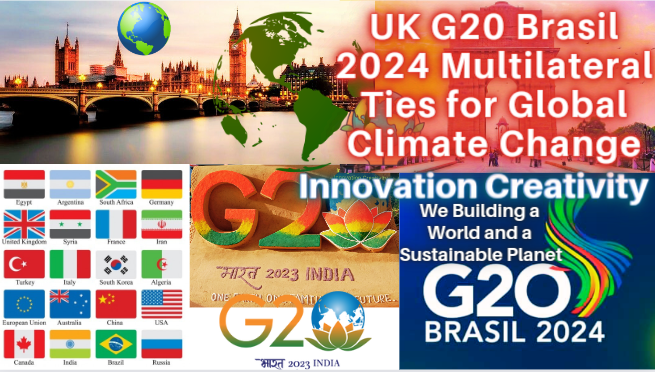
UK G20 Brasil 2024 Multilateral Ties for Global Climate Change

In Recent Years of UK Global Leadership has been raised for Global Climate Change, this is being crucial matter to be Resolved for Sustainable Existence of Mother Nature.,In the ever-evolving Landscape of Global Affairs, the UK and Brasil have taken significant strides towards a sustainable future by strengthening their multilateral ties within the G20 framework. The year 2024 marks a pivotal moment in their collaborative efforts to address the pressing issue of Climate Change on a Global scale.


Having I inform that related UK - EU Considerations in this Blog Descriptions according to credible Sources of Printed Media ,Digital Media behalf of Internet Websites, Blogs, Applications as well as Televisions Broadcasting Channels Sources are being referred to collect the certain contents of this Blog's Post : UK G20 Brasil 2024 Multilateral Ties for Global Climate Change, If there would be related with personal , moral , individual , Firms and other circumstance would be Coincidence at all.This Blog's Contents Provide Knowledge, certain Awareness and Official Information about particular Topic which would be recent Formations of Conditions at all.Kindly Viewers mentioned this certain Notification to acknowledge about Contents Descriptions about specific Subjects inward. 


Embracing Unity for Environmental Resilience


As leaders from the UK and Brasil converge at the G20 summit, there is a palpable sense of unity in their commitment to combat climate change. This shared vision is not only commendable but also reflects a positive shift towards a more environmentally resilient future.

Collaborative Initiatives : A Beacon of Hope

One of the shining examples of the UK and Brasil's commitment to environmental stewardship is their joint initiative within the G20 framework. The collaborative efforts focus on research and development in sustainable technologies, renewable energy sources, and innovative climate adaptation strategies. By pooling their resources and expertise, these nations aim to catalyze global progress in the fight against climate change.

Sustainable Diplomacy in Action

Diplomacy plays a pivotal role in addressing global challenges, and the UK and Brasil are exemplifying this truth through their eco-friendly collaborations. By fostering open dialogues and diplomatic ties, these nations are creating an environment conducive to shared learning and resource mobilization, ultimately propelling the world towards a greener tomorrow.

Setting an Example for the World

The UK and Brasil's commitment to climate action sends a powerful message to the international community. By showcasing their ability to set aside differences and work towards a common goal, these nations inspire others within the G20 and beyond to prioritize the well-being of the planet over political divergences.

Positive Impacts on Local Communities

While the focus is often on the global implications of such collaborations, it's crucial to acknowledge the positive impacts on local communities. The initiatives born out of the UK G20 Brasil 2024 partnership have the potential to create sustainable development opportunities, green jobs, and improved living standards for citizens in both nations.

SEO Friendly Insights
In the ever-competitive digital landscape, ensuring SEO friendliness is paramount for the visibility of this positive narrative. Incorporating keywords such as "UK G20 Brasil 2024," "multilateral ties," and "global climate change" strategically throughout the content will enhance its online discoverability.

Conclusion on UK G20 Brasil 2024 Multilateral Ties for Global Climate Change : 


A Green Legacy in the Making
As the UK and Brasil come together within the G20 framework to address climate change, their collaborative efforts shine as a beacon of hope for a sustainable future. By fostering multilateral ties, embracing unity, and setting an example for the world, these nations are leaving an indelible mark on the global fight against climate change. Through diplomacy, innovation, and a shared commitment to positive change, the UK G20 Brasil 2024 collaboration is indeed crafting a green legacy that resonates far beyond their borders.


In 2024, the UK and Brasil are united within the G20, showcasing a commendable commitment to combat climate change on a global scale.

Joint initiatives between the two nations focus on sustainable technologies, renewable energy, and innovative climate adaptation strategies within the G20 framework.

Diplomatic efforts between the UK and Brasil are propelling the world towards a greener future, emphasizing the vital role of sustainable diplomacy in addressing environmental challenges.

The collaborative approach of these nations sets a powerful example, inspiring global leaders within the G20 to prioritize environmental well-being over political differences.

Beyond global implications, the UK G20 Brasil 2024 partnership promises positive impacts on local communities, fostering sustainable development opportunities and green job creation.

Ensuring SEO friendliness, strategic incorporation of keywords such as "UK G20 Brasil 2024," "multilateral ties," and "global climate change" amplifies the visibility of this positive narrative in the competitive digital landscape.


=================****************************************================================*****************************************===============
Thank You Readers to View Blog's Contents which would be specifically considerate Enormous Diplomatic Global Actions by Collateral Ties with Global Platforms to resolve Climatic Uncertainties on the Earth Contextual Scenario about UK G20 Brasil 2024 Multilateral Ties for Global Climate Change contextual Scenario UK G20 Brasil 2024 Multilateral Ties for Global Climate Change.


( Disclaimer : Above Contents have been Individual Opinion of Subjective formations of Subjects within the Logical Aspiration by the actual certainty of Theorems. If some of contents meet criteria regarding Individual ,Moral, Personal would be coincidence at all. This Blog does provide Information to Explore Knowledge for Students , Adults and Curious Fellows.Kindly suggest to Viewers Copy of any Contents from this Blog without Permission of Authors will Claim as Copyright Infringement., Violent or Abusing Comments on Blog strictly Prohibited. Infringement of Individual Law will Liable to Legally Actions on particular Fellows.) 

From : Author of Blog.